Ski goggle lens guide: cylindrical, spherical, toric and magnetic systems
How cylindrical, spherical and toric ski goggle lenses differ, how magnetic quick-change systems work, and which anti-fog, OTG and strap options to specify for a private-label snow range.

Short answer: Cylindrical goggle lenses curve only side to side, so they are cheaper and give a flat, classic look. Spherical lenses curve both horizontally and vertically, giving a wider field of view and less distortion. Toric lenses sit between the two. Magnetic systems let riders swap lenses in seconds. For any snow goggle, specify a double-layer lens with an anti-fog inner coating.
Lens shapes
Cylindrical. The lens curves around the face horizontally but is flat vertically. Lower cost and a retro look. Some distortion at the top and bottom edges.
Spherical. Curved in both directions, like a section of a sphere. Wider peripheral vision, less glare from the edges and more internal volume, which helps anti-fog performance.
Toric. A blend with different curvatures on each axis. Closer to the natural shape of the eye with a lower profile than spherical lenses.
Lens change systems
- Flex-fit. The lens is pushed into a groove in the frame. Cheapest, slowest to change.
- Magnetic. Magnets align and hold the lens, often with a secondary latch. Change in seconds with gloves on. A strong premium selling point.
- Clip or lever. Mechanical clips that lock the lens. Secure, mid cost.
You will find all three in our ski goggles collection.
Anti-fog and venting
Insist on a double-layer lens with a hydrophilic anti-fog treatment on the inner lens, and frame vents with foam covers to keep snow out. Triple-layer face foam with a fleece facing improves comfort and seal.
Fit and sizing
Offer at least an adult medium-large and a youth size. If your customers wear glasses, add an OTG version. Check helmet compatibility: the frame top should sit flush with the helmet brim without a gap.
Straps and branding
Silicone-backed jacquard straps keep goggles in place on helmets. Straps are the most visible branding surface on a goggle, so most private-label programs put the logo there, with a second mark on the frame or lens corner.
Suggested snow range
| Slot | Spec |
|---|---|
| Entry | Cylindrical, flex-fit, single colour strap |
| Core | Spherical, magnetic, mirror lens + low-light spare |
| Youth | Small frame, spherical, soft TPU |
| OTG | Deep frame, cylindrical or spherical |
Request snow samples before the end of summer to be on shelf for the season.
Frequently asked questions
What does OTG mean on ski goggles?
OTG stands for over the glasses. OTG goggles have a deeper frame and side channels so the wearer can fit prescription glasses underneath.
Why do goggles have two lens layers?
The double lens creates an insulating air gap. The warmer inner lens stays above the dew point, which, together with an anti-fog coating, keeps fog from forming.
Which lens colour works best in flat light?
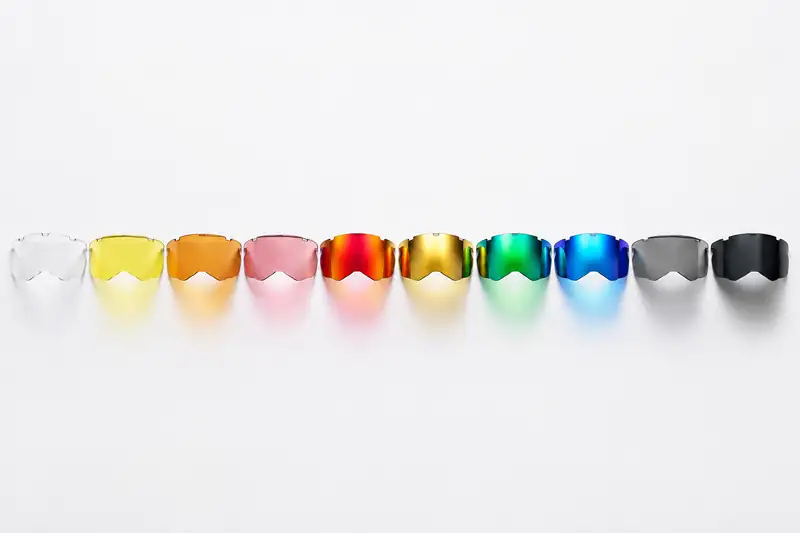
Low-VLT tints such as yellow, rose and light amber in filter category 1 work best on overcast and snowy days.